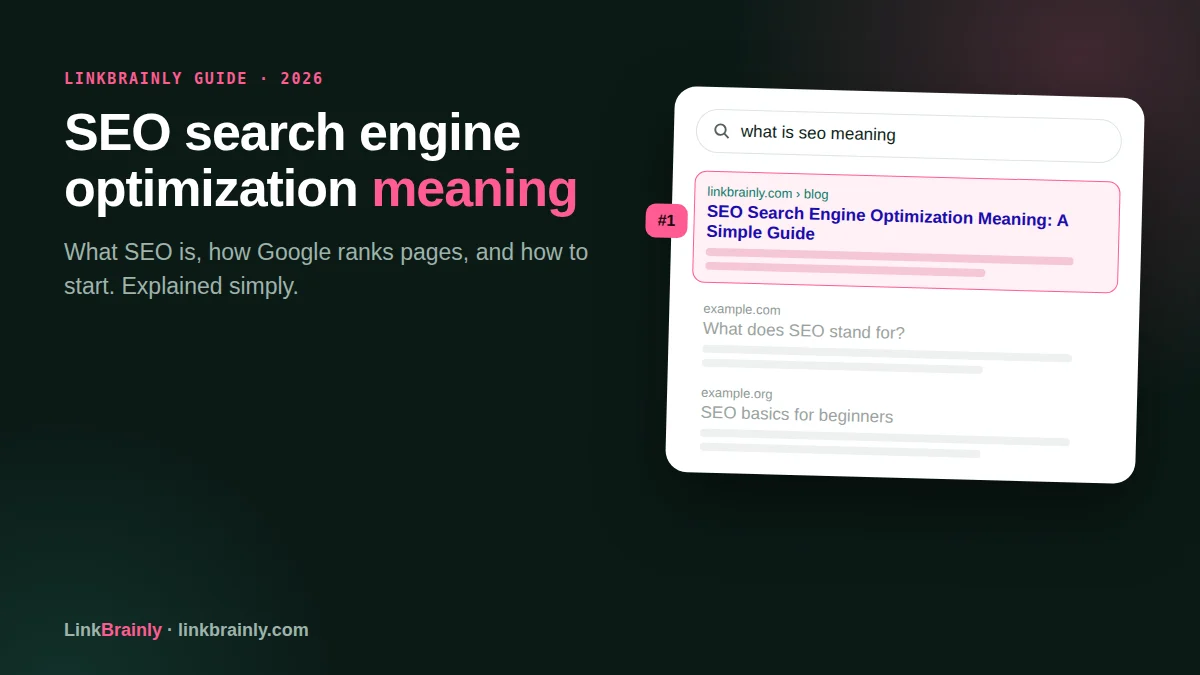
What Is the Search Engine Optimization Meaning in Simple Words?
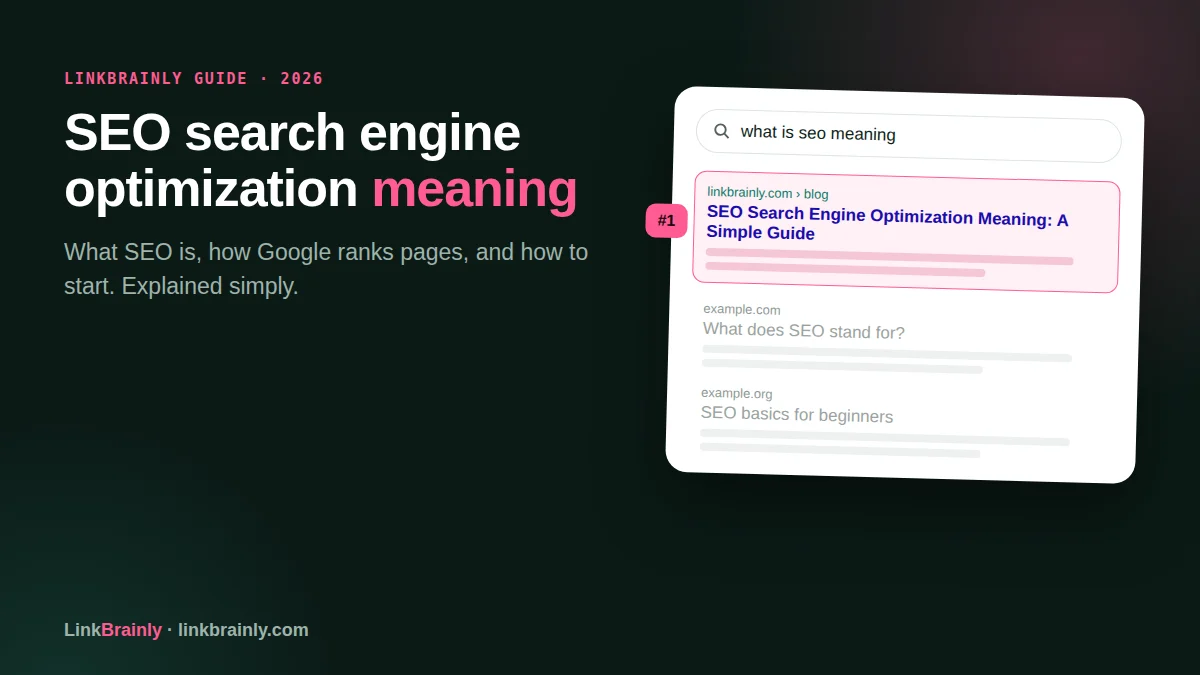
Think of a search engine as a librarian with billions of books. SEO does two jobs for your "book": it puts a clear title and table of contents on the cover, and it makes sure the book actually contains what the reader came for. The librarian recommends books that do both, and that pairing is the whole SEO in one picture.
Organic results are the unpaid listings under the ads on a search results page. Paid results are marked "Sponsored" and cost money per click. SEO only affects the organic listings, which is why people call it "free traffic", even though it takes time and effort to earn. In practice, the SEO search engine optimization meaning covers organic results only.
How Search Engines Work: Crawl, Index, Rank
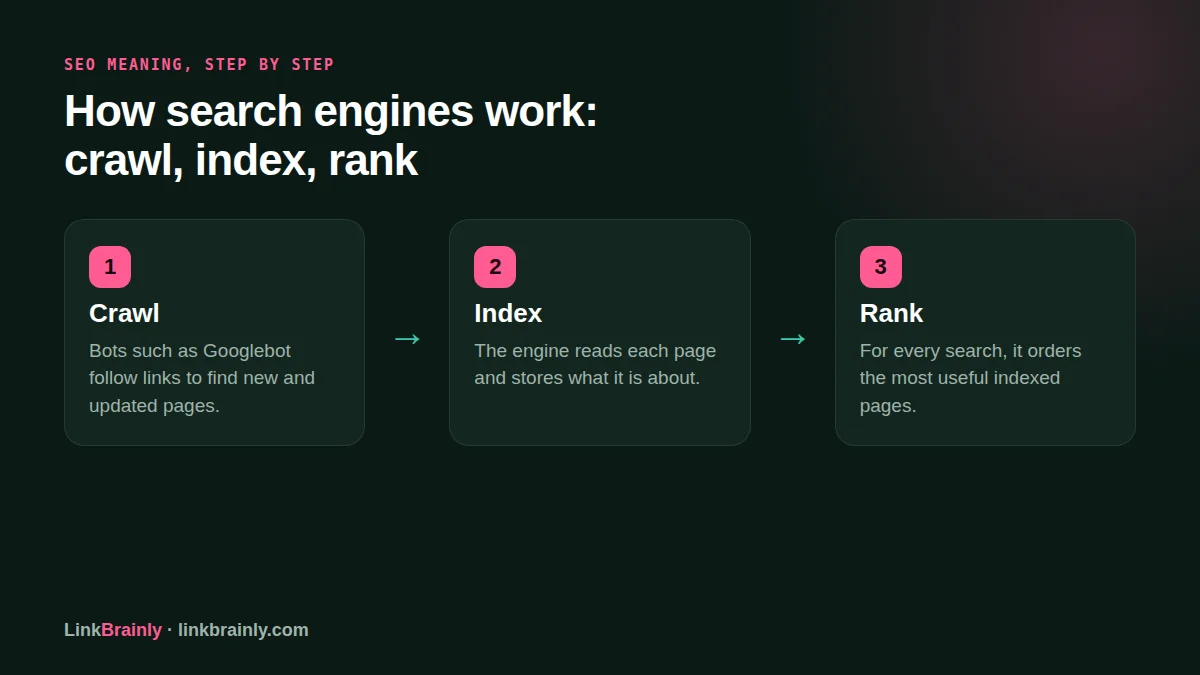
To understand the SEO search engine optimization meaning, it helps to know the three steps every search engine follows. Each step is a place where a website can win or lose.
1. Crawling. Search engines send automated programs called crawlers or bots (Googlebot is Google's) to visit pages. Crawlers move from page to page by following links. A page with no links pointing to it, called an orphan page, is hard for crawlers to find.
2. Indexing. After a crawler visits a page, the search engine reads the text, headings, images, and code, then stores what the page is about in a huge database called the index. A page that is blocked by robots.txt, marked "no index", or too thin to be useful may be left out of the index.
3. Ranking. When someone searches, the engine picks the most relevant and useful pages from its index and orders them. Google has said it looks at the meaning of the query, the relevance, and quality of the content, the usability of the page, and the context of the searcher, such as location and language. Most people picture this ranking step when they hear the SEO, but it depends on the first two steps working.
The Three Types of SEO
Most SEO work falls into three groups. A complete picture of the SEO search engine optimization meaning includes all three, because a weakness in one can hold back the other two.
On-Page SEO
On-page SEO covers everything on the page itself: the title tag, meta description, headings, body text, images and their alt text, URL, and internal links to other pages on the same site. On-page work is the part of the SEO you control most directly. The goal is to make each page clearly about one topic and useful for the person searching. For example, a page about "almond gift boxes" should say so in its title and first paragraph, show the products, answer common questions about delivery and shelf life, and link to relate gift pages.
Off-Page SEO
Off-page SEO is what other websites and people say about you. Backlinks (links from other sites to yours), Brand mentions, reviews, directory listings and social profiles all send signals about trust and popularity. One link from a respected site in your industry is usually worth more than dozens of links from unrelated pages.
Technical SEO
Technical SEO makes sure search engines can crawl and index the site without problems. It includes page speed, mobile friendliness, HTTPS, XML sitemaps, clean URL structures, structured data (schema), and fixing broken links and redirect chains. Technical SEO is invisible to most visitors, but when it breaks, rankings can drop across the whole site. Many site owners leave technical work out of their idea of the SEO search engine optimization meaning, and it is often where the quickest wins are hiding.
Why SEO Matters for a Business
The practical SEO for a business owner is steady, compounding traffic from people who are already looking for what you sell. Someone who searches "best dry fruits for Diwali gifting" has told you exactly what they want. Ranking for that search puts your page in front of a buyer at the right moment.
SEO also keeps working after the effort is done. A well-written guide that ranks this year can keep bringing visitors next year with light updates, while an ad stops sending traffic the day the budget runs out. That is why many brands treat SEO as a long-term asset and paid ads as a short-term lever.
Finally, SEO work improves the website for people too. Faster pages, clearer headings, fewer broken links and better navigation help every visitor, not only the ones who arrive from Google.
SEO Vs Paid Search: What Is the Difference?
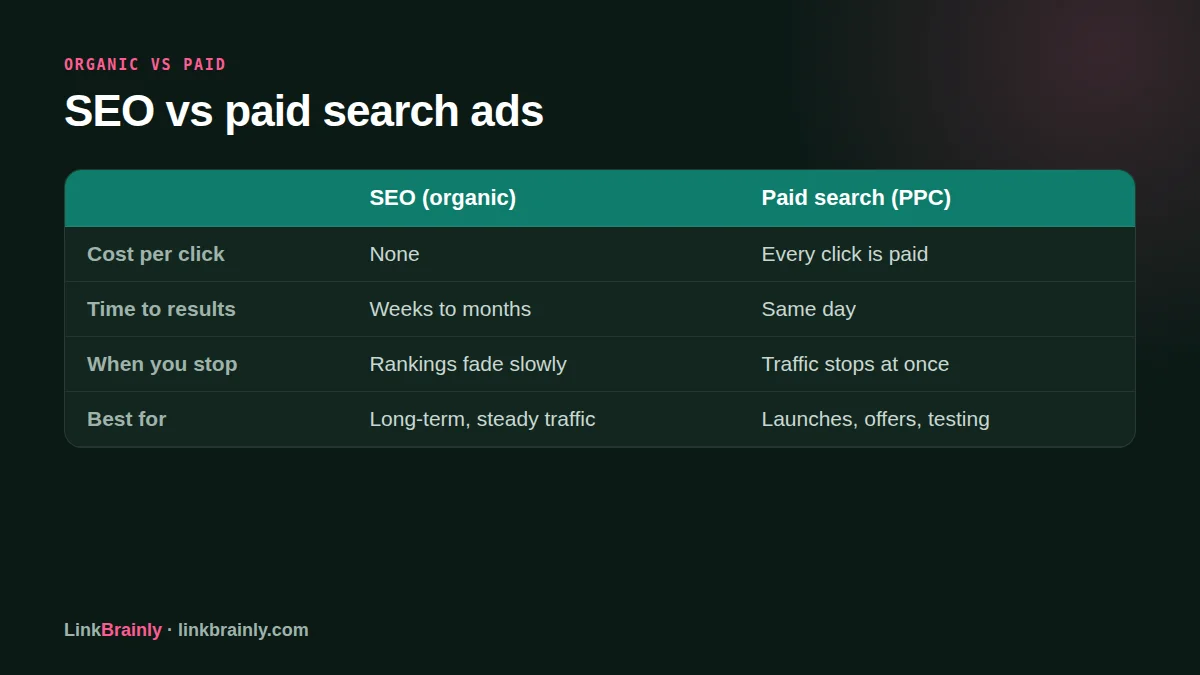
SEO and paid search (also called PPC, pay-per-click) both aim to get a website seen on a search results page, but they work differently. Paid search is often confused with SEO, so it is worth separating the two when explaining the SEO search engine optimization meaning.
| Point | SEO (organic) | Paid search (PPC) |
|---|---|---|
| Cost per click | None | You pay for every click |
| Time to results | Usually weeks to months | Same day once ads are approved |
| What happens when you stop | Rankings fade slowly | Traffic stops at once |
| Best for | Long-term, steady traffic and trust | Launches, sales, testing new offers |
Most growing businesses use both. Paid search fills the gap while SEO builds up, and the search terms that convert well in ads show which topics deserve an SEO page.
Where internal links fit into the SEO search engine optimization meaning
Internal links are links from one page of your site to another page of the same site, such as a blog post linking to a product page. They are one of the most underrated parts of the SEO search engine optimization meaning, because they help with all three steps: crawlers find pages through them, search engines understand topics from the words used in the link (the anchor text), and link value flows from strong pages to newer ones.
Common internal linking problems include orphan pages that nothing links to, broken internal links that lead to a 404 error, and vague anchor text such as "click here" or "read more". These problems are easy to miss on a site with hundreds of pages, and they quietly waste rankings.
LinkBrainly was built to solve exactly this problem. It crawls a site, finds orphan pages, broken links and weak anchors, and uses AI to suggest internal links inside sentences that already exist on your pages. WordPress sites can use the LinkBrainly WordPress plugin, which works alongside Yoast SEO and Rank Math, and store owners can use the LinkBrainly Shopify app to fix links, meta descriptions and alt text without leaving the Shopify admin.
How to Start with SEO: A 7-Step Checklist
You do not need a large budget to start. These seven steps turn the SEO search engine optimization meaning into daily practice for most small and mid-sized websites.
- Connect Google Search Console. It is free, keeps up to 16 months of search data, and shows which searches bring visitors, which pages are indexed, and which errors Google found.
- Pick one main keyword per page. Choose the phrase a buyer would actually type, and make sure no two pages target the same phrase.
- Write a clear title tag and meta description. Keep titles under about 60 characters and descriptions under about 155, with the keyword near the start.
- Answer the question in the first paragraph. Then use headings to cover the follow-up questions a reader would ask next.
- Add alt text to images. Describe what the image shows in plain words. It helps visually impaired visitors and image search.
- Link your pages together. Give every important page at least a few internal links from related pages, using descriptive anchor text.
- Check speed and mobile. Test key pages on a phone. Compress heavy images and remove anything that makes pages slow to load.
Repeat the audit every month or two. SEO is not a one-time task, because your site, your competitors, and search engines all keep changing.
Common SEO Myths
A few popular myths blur the SEO search engine optimization meaning for beginners. Here is what is true instead.
"SEO is about repeating keywords." Stuffing a keyword into every sentence makes a page harder to read and can hurt rankings. Use the main phrase where it fits naturally, and use related words and questions around it.
"More pages always mean more traffic." Many thin pages on the same topic compete with each other. One complete page usually beats five short ones.
"SEO is only for big brands." Small sites often win specific, local, and long-tail searches that big brands ignore, such as a city name plus a product, or a detailed how-to question.
"Once a page ranks, the work is done." Rankings change as competitors publish and search engines update. Pages that are refreshed with new details tend to hold their positions longer.
Next Steps
Now that the SEO search engine optimization meaning is clear, the fastest way to see where your own site stands is to run an audit. Check it for orphan pages, broken links, weak titles and missing alt text, then fix the pages that bring in the most visitors first.
For more SEO tips, product updates and internal linking guides, follow LinkBrainly on LinkedIn.
Frequently asked questions
What is the full form of SEO?
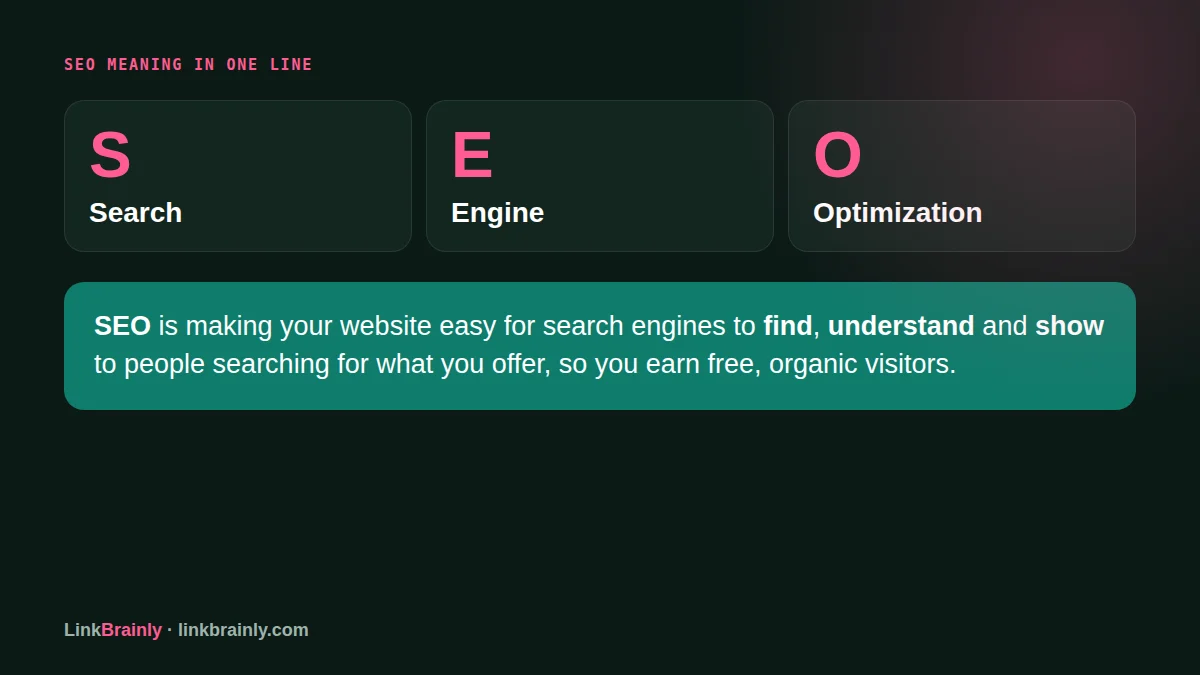
The full form of SEO is search engine optimization (spelled "optimization" in British English). The SEO search engine optimization meaning is improving a website so it appears higher in unpaid search results for relevant searches.
Is SEO free?
Organic clicks are free, because search engines do not charge for them. The work itself costs time, or money if you hire an agency or use SEO tools. Many tools let you start without paying. LinkBrainly's free audit, for example, checks up to 200 pages of a site for internal link and SEO issues.
How long does SEO take to work?
Small fixes such as better titles or repaired broken links can show results within weeks after the pages are recrawled. New pages on competitive topics usually take several months to rank well. Results depend on the competition, the site's history and how often it is updated.